
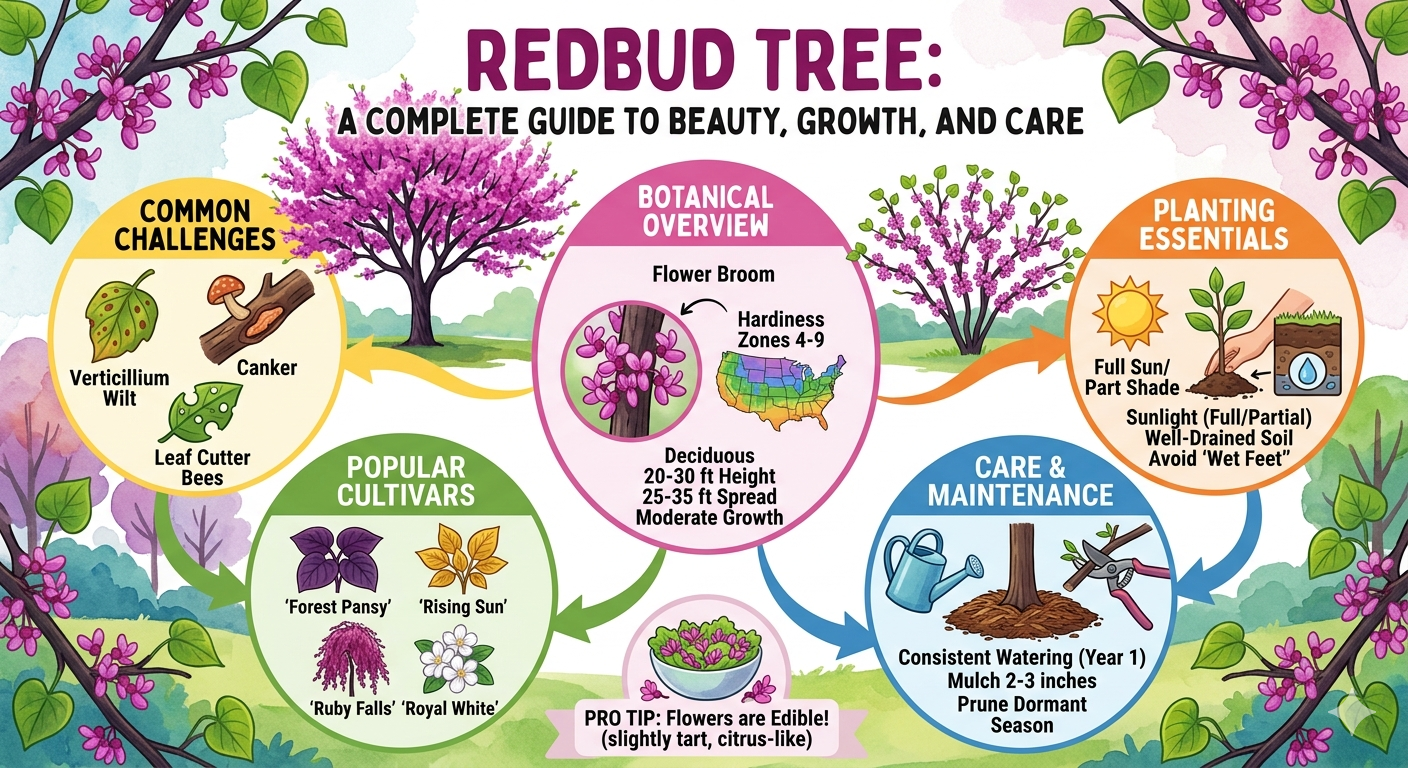
The redbud tree is one of the most admired ornamental trees, celebrated for its stunning spring blossoms and graceful structure. Known for its vibrant pink and purple flowers that bloom before the leaves appear, this tree creates a breathtaking display that signals the arrival of warmer days. Whether planted in gardens, parks, or along streets, the redbud tree adds charm and elegance to any landscape.
This article explores everything you need to know about the redbud tree, including its characteristics, types, planting tips, maintenance, and benefits. By the end, you will understand why this tree remains a favorite among gardeners and landscapers alike.
What Is a Redbud Tree?
The redbud tree belongs to the genus Cercis and is native to various regions, including North America, Europe, and Asia. It is a deciduous tree, meaning it sheds its leaves annually. The most popular variety is the Eastern redbud, known for its adaptability and vibrant blossoms.
Typically, a redbud tree grows between 20 to 30 feet tall, with a similar spread. Its heart-shaped leaves and uniquely shaped branches give it an artistic appearance throughout the year.
Unique Features of the Redbud Tree
Early Spring Blooms
One of the most striking features of the redbud tree is its early blooming habit. Before leaves emerge, clusters of small, pea-like flowers cover the branches and even the trunk. This phenomenon creates a dramatic and colorful effect.
Heart-Shaped Leaves
After the flowering phase, the tree develops lush green leaves that are distinctly heart-shaped. These leaves provide a soft and attractive canopy during the growing season.
Interesting Bark and Branch Structure
The bark of a redbud tree is smooth when young and becomes slightly rough with age. Its branching pattern often appears irregular, adding character and visual interest.
Seasonal Appeal
The redbud tree offers beauty throughout the year. From spring blossoms to summer foliage and autumn color changes, it remains visually appealing in every season.
Popular Types of Redbud Trees
Eastern Redbud
The Eastern redbud is the most widely grown variety. It thrives in a variety of soil conditions and produces vibrant pink to purple flowers.
Western Redbud
This variety is more drought-tolerant and is commonly found in warmer climates. Its flowers are slightly lighter in color compared to the Eastern type.
Chinese Redbud
The Chinese redbud is known for its larger flowers and more compact growth habit, making it ideal for smaller spaces.
Weeping Redbud
A unique variety, the weeping redbud features cascading branches that create a dramatic, umbrella-like shape.
Benefits of Planting a Redbud Tree
Enhances Landscape Beauty
The redbud tree instantly elevates the appearance of any outdoor space. Its colorful blooms and elegant structure make it a focal point in gardens.
Supports Wildlife
This tree attracts pollinators such as bees and butterflies, contributing to a healthy ecosystem.
Provides Shade
Although not a large tree, the redbud offers enough shade to create a comfortable outdoor environment.
Low Maintenance
Compared to many ornamental trees, the redbud tree requires minimal care once established.
Ideal Growing Conditions
Climate
Redbud trees grow best in temperate climates. They can tolerate a range of temperatures but prefer mild winters and warm summers.
Sunlight
For optimal growth and flowering, plant the tree in full sun to partial shade. More sunlight generally results in better blooms.
Soil Requirements
The redbud tree thrives in well-drained soil. While it can adapt to different soil types, it performs best in moderately fertile soil.
Water Needs
Young trees require regular watering until established. Mature trees are relatively drought-tolerant but benefit from occasional deep watering during dry periods.
How to Plant a Redbud Tree
Choosing the Right Location
Select a location with sufficient sunlight and space for the tree to grow. Avoid areas with poor drainage.
Preparing the Soil
Loosen the soil and mix in organic matter such as compost to improve fertility and drainage.
Planting Process
Dig a hole twice as wide as the root ball and place the tree at the same depth it was growing in the nursery container. Fill the hole with soil and water thoroughly.
Mulching
Apply a layer of mulch around the base to retain moisture and regulate soil temperature. Keep the mulch away from the trunk to prevent rot.
Redbud Tree Care and Maintenance
Pruning
Prune the tree during late winter or early spring to remove dead or diseased branches. Light pruning helps maintain shape and encourages healthy growth.
Fertilization
Feed the tree with a balanced fertilizer in early spring to support growth and flowering.
Pest and Disease Control
Redbud trees are generally resistant to pests but may occasionally face issues such as cankers or leaf spots. Regular inspection helps detect problems early.
Watering
Maintain consistent watering, especially during the first few years. Avoid overwatering, as it can lead to root problems.
Common Problems and Solutions
Leaf Spot Diseases
These appear as small spots on leaves. Proper spacing and good air circulation help prevent this issue.
Canker Disease
Cankers can cause branch dieback. Prune affected areas promptly to prevent spreading.
Drought Stress
While somewhat drought-tolerant, prolonged dry conditions can affect growth. Deep watering during dry spells can resolve this issue.
Landscaping Ideas with Redbud Trees
As a Focal Point
Plant a redbud tree in the center of your garden to create a striking visual centerpiece.
Along Walkways
Lining walkways with redbud trees adds charm and creates a welcoming atmosphere.
Mixed Plantings
Combine redbud trees with shrubs and perennials for a layered and dynamic landscape design.
Small Gardens
Due to its moderate size, the redbud tree is perfect for smaller gardens where space is limited.
Seasonal Care Tips
Spring
Focus on fertilizing and enjoying the blooms. Ensure adequate water supply during the flowering period.
Summer
Monitor watering needs and check for pests or diseases.
Autumn
Rake fallen leaves and prepare the tree for dormancy.
Winter
Perform pruning and protect young trees from extreme cold if necessary.
Why Choose a Redbud Tree?
The redbud tree stands out for its beauty, versatility, and ease of care. It is suitable for both beginner and experienced gardeners. Its ability to adapt to various conditions makes it a reliable choice for different landscapes.
Additionally, the tree’s early blooms provide one of the first signs of spring, making it a joyful addition to any outdoor space.
(FAQs)
How fast does a redbud tree grow?
The redbud tree has a moderate growth rate, typically growing about 1 to 2 feet per year under ideal conditions.
When does a redbud tree bloom?
It usually blooms in early spring, before the leaves appear, creating a vibrant display of flowers.
Can a redbud tree grow in containers?
Yes, smaller varieties can be grown in large containers, but they require proper care and regular watering.
Is the redbud tree suitable for small gardens?
Absolutely. Its moderate size and attractive shape make it ideal for smaller spaces.
How long does a redbud tree live?
On average, a redbud tree can live between 20 to 30 years, depending on care and environmental conditions.
Does the redbud tree require a lot of maintenance?
No, it is considered a low-maintenance tree, making it perfect for busy gardeners.
Conclusion
The redbud tree is a stunning addition to any landscape, offering beauty, versatility, and ease of care. With its vibrant spring blooms, unique foliage, and manageable size, it continues to be a popular choice for homeowners and garden enthusiasts.
By understanding its needs and providing proper care, you can enjoy the elegance and charm of a redbud tree for many years. Whether used as a focal point or part of a larger garden design, this tree brings life and color to outdoor spaces in a truly remarkable way.


