
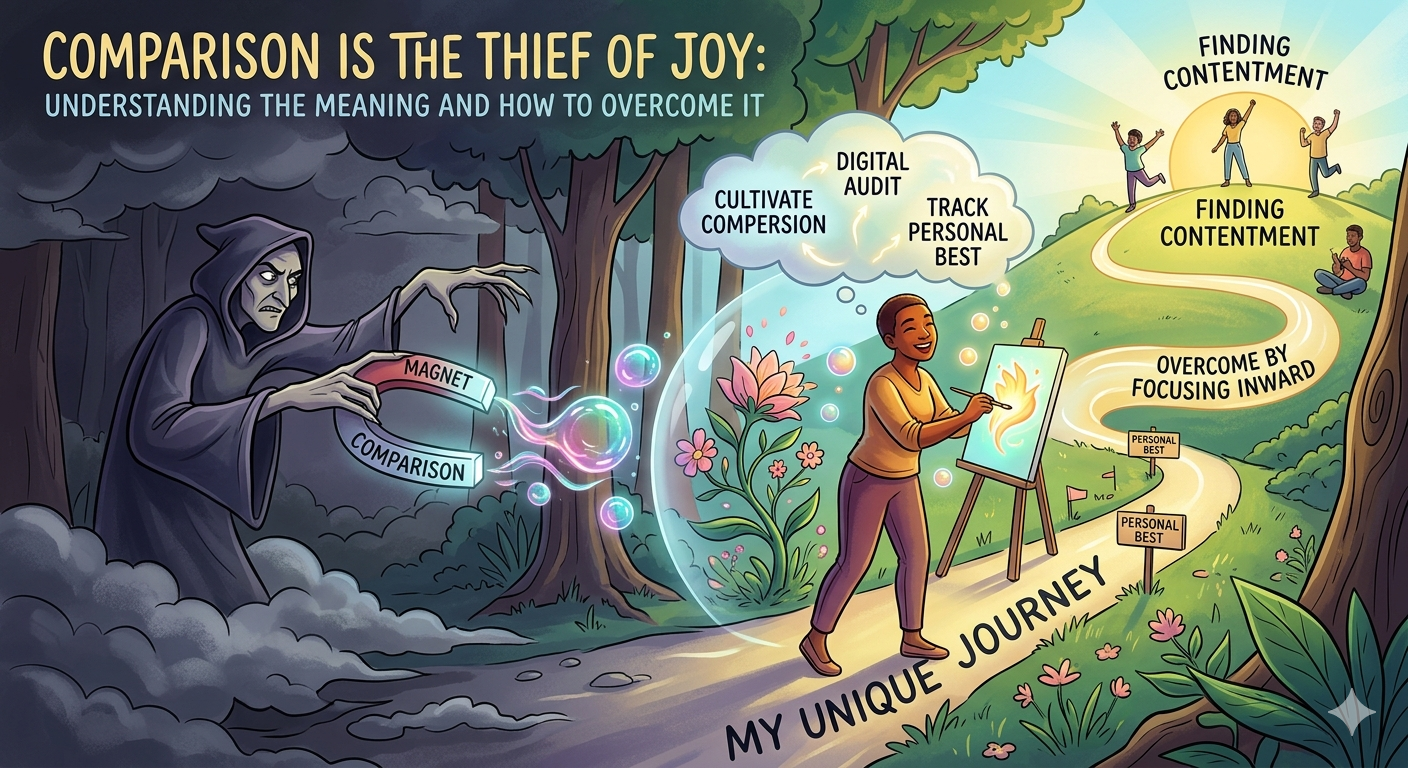
The phrase comparison is the thief of joy has become a powerful reminder in modern life. In a world driven by social media, achievements, and constant competition, many people unknowingly fall into the trap of comparing themselves to others. Whether it is career success, wealth, relationships, or lifestyle, comparison often leads to dissatisfaction rather than motivation.
Understanding the deeper meaning behind the phrase comparison is the thief of joy can help individuals shift their mindset toward gratitude, self-growth, and personal fulfillment. When people focus too much on what others have, they often overlook their own progress and blessings.
This article explores the meaning, origins, psychological impact, and practical strategies to overcome comparison in everyday life.
The Meaning of “Comparison Is the Thief of Joy”
At its core, comparison is the thief of joy suggests that constantly measuring your life against others can steal your happiness. Instead of appreciating your own achievements, comparison causes you to focus on what you lack.
For example, someone may have a stable job, supportive family, and comfortable life. However, when they compare themselves to someone earning more money or living a more luxurious lifestyle, they may suddenly feel unhappy or inadequate.
This mindset shifts attention away from gratitude and toward dissatisfaction. The joy that comes from personal progress disappears because the benchmark for happiness becomes someone else’s life.
The Origin of the Phrase
The quote comparison is the thief of joy is widely attributed to former U.S. President Theodore Roosevelt. Though historians debate the exact origin, the message remains universally relevant.
The idea reflects a timeless truth about human nature. For centuries, philosophers and thinkers have warned about the dangers of envy and constant comparison. In modern society, where people are exposed to carefully curated images of success online, the quote feels more relevant than ever.
The phrase continues to resonate because it captures a simple but profound insight about human psychology.
Why People Naturally Compare Themselves
Human beings are naturally wired to compare. Psychologists describe this behavior as social comparison, a process where individuals evaluate themselves based on how they measure up to others.
This tendency developed as a survival mechanism. In early societies, comparing oneself to others helped people understand their position within a group.
Today, however, this instinct often creates unnecessary stress. Instead of helping people grow, constant comparison can lead to feelings of insecurity, jealousy, and self-doubt.
People compare themselves in many areas, including:
Career achievements
Financial status
Physical appearance
Relationships
Education and intelligence
Social media popularity
When these comparisons become frequent and negative, they begin to damage self-esteem.
The Role of Social Media in Modern Comparison
Social media platforms have significantly intensified the problem described by comparison is the thief of joy. Online spaces often display highlight reels of people’s lives rather than reality.
Photos of vacations, luxury purchases, celebrations, and achievements can create the illusion that everyone else is constantly succeeding and living perfectly.
In reality, these images rarely show the struggles, failures, or everyday challenges that people face. Yet viewers may unconsciously compare their real life to someone else’s curated presentation.
This leads to unrealistic expectations and feelings of inadequacy.
As a result, many people experience increased anxiety, lower self-esteem, and reduced life satisfaction when they engage in frequent comparison through social media.
How Comparison Affects Mental Health
The phrase comparison is the thief of joy accurately reflects the emotional consequences of constant comparison. When individuals focus too much on what others have, they may experience several negative psychological effects.
Decreased Self-Esteem
Comparing yourself to someone who appears more successful or attractive can make you feel inferior. Over time, this can reduce confidence and self-worth.
Increased Stress and Anxiety
Constantly worrying about whether you are keeping up with others can create unnecessary pressure.
Feelings of Envy
Envy often emerges when people feel someone else has something they deserve or desire.
Reduced Gratitude
When people focus on what they lack, they stop appreciating what they already have.
Loss of Motivation
Instead of inspiring growth, comparison can sometimes discourage people from trying at all.
These effects demonstrate why the idea that comparison is the thief of joy resonates with so many people.
Healthy Comparison vs. Harmful Comparison
Not all comparison is negative. In some situations, it can help people improve themselves.
Healthy Comparison
Healthy comparison happens when someone looks at another person’s achievements and feels inspired rather than discouraged. For example, seeing a successful entrepreneur might motivate someone to pursue their own goals.
Harmful Comparison
Harmful comparison occurs when individuals constantly measure their worth against others and feel inadequate. This type of comparison often leads to negative emotions rather than growth.
The key difference lies in mindset. Healthy comparison focuses on learning and improvement, while harmful comparison focuses on judgment and insecurity.
Signs That Comparison Is Affecting Your Happiness
Many people do not realize how often they compare themselves to others. However, several signs indicate that this habit may be stealing joy from daily life.
Some common indicators include:
Feeling jealous of others’ achievements
Constantly checking social media for validation
Believing everyone else is more successful
Feeling dissatisfied despite personal accomplishments
Measuring your worth through external standards
Recognizing these patterns is the first step toward overcoming the cycle of comparison.
Practical Ways to Stop Comparing Yourself to Others
Breaking the habit described by comparison is the thief of joy requires intentional effort and self-awareness. Several strategies can help individuals shift their mindset.
Practice Gratitude
Focusing on what you already have can significantly improve happiness. Keeping a gratitude journal or reflecting on daily blessings can redirect attention away from comparison.
Limit Social Media Consumption
Reducing time spent on social platforms can help minimize exposure to unrealistic portrayals of success.
Focus on Personal Progress
Instead of measuring yourself against others, compare your present self to your past self. Personal growth is the most meaningful benchmark.
Celebrate Your Achievements
Take time to acknowledge accomplishments, even small ones. Recognizing progress builds confidence and motivation.
Develop Self-Awareness
Understanding your strengths, values, and goals helps you define success on your own terms rather than relying on external comparisons.
Surround Yourself With Positive Influences
Spending time with supportive people who encourage growth rather than competition can help maintain a healthier mindset.
the Importance of Defining Your Own Success
One major reason comparison steals joy is that people often adopt society’s definition of success rather than creating their own.
Success is not the same for everyone. Some individuals value financial achievement, while others prioritize family, creativity, personal freedom, or community impact.
When people define success based on their own values, they become less likely to compare themselves to others.
This shift helps individuals pursue meaningful goals and experience greater satisfaction in life.
Building Confidence Without Comparison
Confidence grows when people recognize their unique qualities and abilities. Instead of measuring themselves against others, individuals can focus on self-development.
Some effective ways to build confidence include:
Learning new skills
Setting achievable goals
Practicing self-compassion
Reflecting on past achievements
Embracing personal strengths
These habits reinforce the idea that happiness comes from internal growth rather than external competition.
Why Embracing Individual Paths Brings Joy
Every person’s life journey is different. Circumstances, opportunities, talents, and challenges vary widely between individuals.
When people accept that their path does not need to look like someone else’s, they experience greater peace and fulfillment.
The message behind comparison is the thief of joy encourages people to focus on authenticity rather than imitation.
By embracing individuality, individuals can pursue goals that align with their passions and values.
Creating a Life of Gratitude and Fulfillment
Replacing comparison with gratitude transforms the way people experience life.
Instead of asking, “Why don’t I have what they have?” individuals begin asking, “What meaningful things already exist in my life?”
This mindset encourages appreciation for relationships, health, opportunities, and personal achievements.
Over time, gratitude strengthens happiness and reduces the urge to compare.
Conclusion
The phrase comparison is the thief of joy offers a powerful lesson about happiness and self-worth. While comparing ourselves to others may feel natural, excessive comparison often leads to dissatisfaction, envy, and reduced self-esteem.
In a world filled with constant exposure to other people’s achievements and lifestyles, it is more important than ever to focus on personal growth rather than external competition.
By practicing gratitude, defining personal success, limiting unhealthy comparisons, and celebrating individual progress, people can protect their happiness and live more fulfilling lives.
Ultimately, joy comes not from having more than others, but from appreciating the life you are building for yourself.
(FAQs)
What does comparison is the thief of joy mean?
The phrase means that constantly comparing your life, achievements, or possessions with others can take away your happiness and prevent you from appreciating your own progress.
Who said comparison is the thief of joy?
The quote is commonly attributed to Theodore Roosevelt, though the exact origin is debated. Regardless of authorship, the message remains widely recognized.
Why do people compare themselves to others?
Humans naturally compare themselves as a way to evaluate their abilities, social status, and achievements. However, excessive comparison can lead to negative emotions.
How can I stop comparing myself to others?
You can reduce comparison by focusing on gratitude, limiting social media exposure, setting personal goals, and celebrating your own progress.
Is comparison always bad?
No, comparison can sometimes motivate improvement. However, when it leads to jealousy, insecurity, or dissatisfaction, it becomes harmful.
Why is comparison common on social media?
Social media often shows curated highlights of people’s lives. Because viewers see only the best moments, they may develop unrealistic expectations and compare themselves unfairly.
By remembering that comparison is the thief of joy, individuals can focus on gratitude, personal growth, and authentic happiness rather than chasing someone else’s version of success.


