In today’s fast-paced industrial and construction sectors, innovation and precision are essential for delivering high-quality results. Businesses are constantly adopting advanced tools and technologies to stay competitive and meet growing demands. Among the most impactful solutions are 3D Modeling and fabrication and welding services, which together streamline the entire process from design to production.
The Role of 3D Modeling in Modern Design
3D modeling has revolutionized the way engineers, architects, and designers plan and visualize projects. It involves creating a digital three-dimensional representation of an object or structure, allowing professionals to explore every detail before physical production begins.
With the help of 3D Modeling, designers can identify potential issues early in the development stage. This reduces costly errors and ensures that projects are completed efficiently. It also allows for easy modifications, enabling teams to refine designs without starting from scratch.
Another significant advantage is enhanced collaboration. 3D models provide a clear visual representation that helps stakeholders understand project concepts. This improves communication and ensures that everyone involved is aligned with the project goals.
Understanding Fabrication and Welding Services
Fabrication and welding services are essential components of industrial production and construction. Fabrication involves cutting, shaping, and assembling materials, while welding is the process of joining these materials using heat and pressure.
Fabrication and welding services are widely used in industries such as construction, manufacturing, automotive, and energy. These services ensure that structures and components are strong, durable, and capable of withstanding demanding conditions.
Modern fabrication techniques incorporate advanced machinery and tools, allowing for high precision and consistency. Skilled welders and technicians play a crucial role in ensuring that each joint is secure and meets industry standards.
Combining Digital Design with Physical Production
The integration of digital design and physical fabrication has transformed modern engineering. By combining 3D Modeling with fabrication processes, businesses can achieve greater accuracy and efficiency.
For example, a 3D model can be directly used to guide fabrication machines, ensuring that every component is produced according to exact specifications. This reduces the risk of errors and minimizes material waste.
Similarly, fabrication and welding services benefit from detailed digital blueprints, which provide clear instructions for production. This integration not only improves quality but also speeds up project completion.
Applications Across Industries
The use of 3D modeling and fabrication services extends across a wide range of industries:
- Construction: Designing and building structural frameworks for buildings and infrastructure.
- Manufacturing: Producing machinery, tools, and industrial components.
- Automotive: Creating durable and precise vehicle parts.
- Aerospace: Developing complex components that require high accuracy.
- Energy Sector: Fabricating equipment for power plants and renewable energy systems.
By leveraging fabrication and welding services, these industries can ensure that their products meet strict quality and safety standards.
Benefits for Businesses
Adopting 3D modeling and fabrication solutions offers several advantages:
- Improved Accuracy: Digital designs ensure precise measurements and reduce errors.
- Cost Efficiency: Minimizes waste and lowers production costs.
- Faster Turnaround: Streamlines processes from design to manufacturing.
- Customization: Allows businesses to create tailored solutions for specific needs.
- Enhanced Quality: Ensures strong and reliable final products.
These benefits make 3D modeling and fabrication services essential for businesses looking to improve their operations and stay competitive.
Future Trends in Engineering and Fabrication
As technology continues to evolve, the future of engineering and fabrication is becoming more advanced. Innovations such as artificial intelligence, automation, and smart manufacturing are set to further enhance these processes.
Advanced 3D Modeling tools now offer features like real-time simulation and virtual testing, allowing engineers to predict performance and optimize designs before production. This leads to better results and reduced development time.
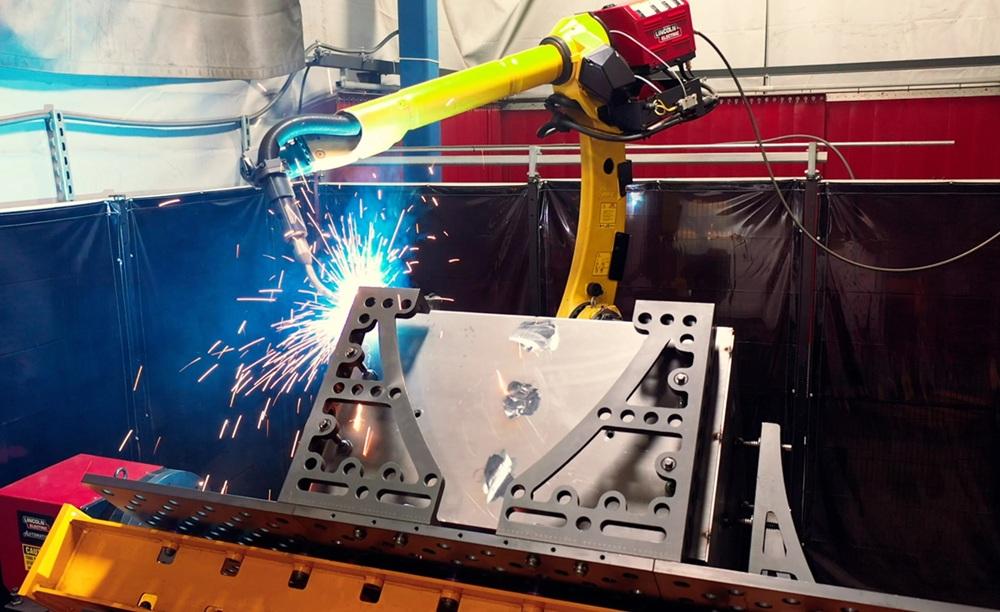
At the same time, fabrication and welding services are adopting robotic systems and automated welding techniques. These advancements improve precision, increase safety, and ensure consistent quality across projects.
Conclusion
3D modeling and fabrication services are at the core of modern engineering and industrial development. Their ability to combine digital precision with physical strength makes them indispensable in today’s competitive market.
By utilizing 3D Modeling and fabrication and welding services, businesses can improve efficiency, reduce costs, and deliver high-quality results. As technology continues to advance, these solutions will play a key role in shaping the future of manufacturing and construction.